
A night guard helps protect teeth from grinding and clenching. A sleep apnea oral appliance is designed to help manage obstructive sleep apnea by supporting a position of the jaw or tongue that helps keep the airway open.
Both may be worn during sleep, but they have different treatment goals. A conventional night guard is not designed to treat sleep apnea, and choosing an appliance starts with understanding the concern you need to address.
At Kevin D. Burgdorf DDS in St. Charles, MO, we take time to explain dental recommendations and answer questions. If you are dealing with worn teeth, jaw discomfort, or concerns about nighttime breathing, understanding these two appliances can help you take the appropriate next step.
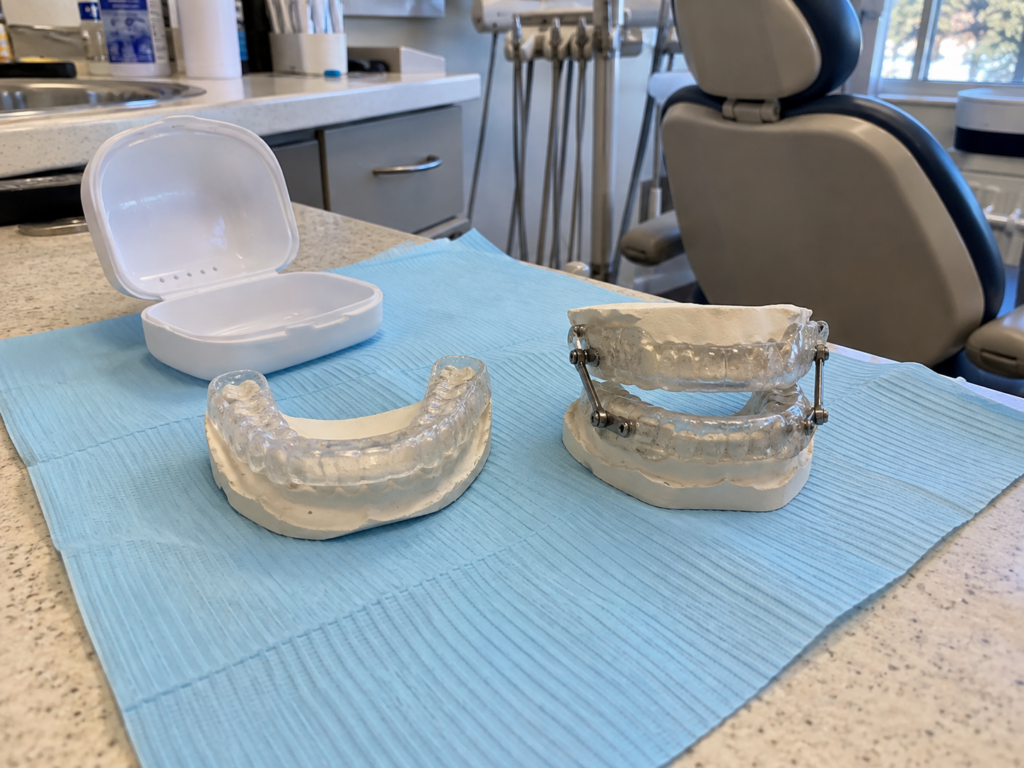
Night Guard vs. Sleep Apnea Oral Appliance at a Glance
| Feature | Night guard or occlusal guard | Sleep apnea oral appliance |
| Main purpose | Help protect teeth from grinding and clenching | Help manage obstructive sleep apnea in appropriate patients |
| How it works | Creates a protective barrier between the teeth | Common designs hold the lower jaw forward to help maintain an open airway |
| Evaluation | Dental examination of the teeth, bite, and jaw | Medical evaluation and diagnosis, plus dental assessment for appliance suitability |
| Follow-up | Review fit, wear, and dental symptoms | Review fit, jaw comfort, bite, and breathing-treatment effectiveness |
| Important limitation | Does not serve as treatment for sleep apnea | Does not automatically meet every tooth-protection need |
What Does a Night Guard Do?
A night guard, also called an occlusal guard, separates the upper and lower teeth to help limit damage from grinding and clenching. These habits are known as bruxism and can occur while you are awake or asleep.
Possible signs include flattened or chipped teeth, sensitivity, and sore or tired jaw muscles. Some people first learn they grind their teeth when a partner hears it at night or a dentist notices wear during an examination.
A guard’s main role is protection. It should not be described as a guaranteed way to stop grinding, eliminate jaw pain, or address every cause of discomfort. Your dentist may recommend other measures based on what is contributing to the problem.
Kevin D. Burgdorf DDS provides custom occlusal guards following an evaluation of your symptoms, teeth, and jaw. The fitting appointment gives the dentist an opportunity to check how the appliance sits in your mouth and explain its use.
How Does a Sleep Apnea Oral Appliance Work?
Obstructive sleep apnea, or OSA, involves repeated narrowing or blockage of the upper airway during sleep. An oral appliance may be one treatment option for an appropriate patient with this diagnosis.
A commonly used design is a mandibular advancement appliance. In plain language, it holds the lower jaw forward while you sleep to help keep the airway open. This has a different purpose from placing a protective barrier between teeth.
The amount of advancement and appliance design are individualized. Your dentist assesses whether your teeth, gums, bite, and jaw can support the proposed appliance.
Oral appliance therapy is not a general treatment for every type of sleep apnea. Medical findings help determine whether it is suitable.
Why Medical Evaluation Comes First for Sleep Concerns
Snoring alone does not tell you whether you have sleep apnea. Likewise, tooth wear or morning jaw soreness cannot establish an OSA diagnosis.
If you have concerns about persistent snoring, witnessed breathing pauses, waking up gasping, or daytime sleepiness, discuss them with a medical professional. Evaluation may include a sleep study.
Your dentist can identify concerns and discuss dental treatment options, but medical providers are responsible for diagnosing OSA. The dental examination then helps determine whether an oral appliance is suitable for your mouth. These assessments answer different questions and work together.
You can raise sleep concerns at a dental appointment before having a medical evaluation. Explain what you or your partner have noticed so the team can discuss appropriate next steps.
Can a Night Guard Treat Sleep Apnea?
A conventional night guard is designed for dental protection, not airway treatment. It should not be used as a substitute for prescribed sleep apnea care.
If you already wear a guard and develop sleep-related breathing concerns, tell both your dentist and medical provider. Bring the appliance to your dental visit so the team can review its design and your current needs.
Do not use reduced tooth soreness as evidence that sleep apnea has been treated. Dental comfort and nighttime breathing are separate outcomes.
Similarly, do not replace a prescribed sleep apnea appliance or CPAP treatment with a store-bought guard without discussing the change with your care team.
What If You Grind Your Teeth and Have Sleep Apnea?
These concerns can occur in the same patient. That makes coordinated planning more useful than trying to choose between two products yourself.
Tell your dentist about your sleep apnea diagnosis, current treatment, grinding symptoms, and any existing appliances. Share relevant sleep-treatment records when available.
Your plan should account for breathing treatment, tooth protection, appliance wear, and jaw comfort.
A sleep apnea appliance is not automatically interchangeable with your existing guard. However, having both concerns also does not automatically mean you need two separate devices. Your dentist and medical provider can help determine the appropriate approach.
Avoid layering appliances or alternating between them on your own. Bring your questions and current devices to an appointment so their use can be reviewed together.
What to Expect From Evaluation and Follow-Up
For a Custom Night Guard
Your dentist reviews your history, examines your teeth and jaw, and checks for possible wear or damage. If a guard is recommended, impressions or other dental records are used to create it.
At fitting, the team reviews how to wear, clean, and store the guard. Later visits allow the dentist to assess its condition and whether your symptoms or dental needs have changed.
For a Sleep Apnea Oral Appliance
Medical evaluation establishes the diagnosis and helps guide treatment selection. A dental assessment determines whether an appliance is appropriate for your teeth, gums, and jaw.
If treatment proceeds, the appliance is fitted and adjusted according to your plan. Follow-up includes reviewing comfort, fit, and bite changes, as well as assessing how well the treatment addresses OSA.
Verification of treatment effectiveness involves medical follow-up and appropriate objective testing. Feeling more rested or snoring less should not be the only basis for deciding that treatment is adequate.
Questions to Bring to Your Appointment
Consider asking:
- What signs suggest grinding or clenching, and could something else explain them?
- What would the recommended appliance address?
- Do my sleep symptoms need medical evaluation?
- How would my existing sleep apnea treatment affect the dental plan?
- How will we check the appliance’s fit and effectiveness?
- What changes should I report between visits?
Bring any existing guard or sleep apnea appliance, a medication list, and relevant medical recommendations. This helps your dentist understand what is already being treated and what still needs attention.
Caring for Your Appliance
Follow the cleaning and storage instructions for your specific device. Materials and designs differ, so advice for one appliance may not suit another.
Bring it to recommended checkups and report cracks, changes in fit, persistent jaw discomfort, or changes in how your teeth meet. Sleep apnea appliances can cause jaw symptoms or tooth movement, which is one reason ongoing dental review matters.
Avoid adjusting the appliance yourself unless your dental team has specifically instructed you how to do so. Let the team know about recent dental work that may affect its fit.
Frequently Asked Questions
Does a night guard stop teeth grinding?
Its main purpose is to help protect teeth from grinding and clenching. It does not guarantee that the habit or related discomfort will stop.
Does everyone who snores need a sleep apnea appliance?
No. Snoring has different causes. Medical evaluation helps determine whether OSA is present and which treatment options may be appropriate.
Can one appliance address grinding and sleep apnea?
Possibly, depending on the appliance and your needs. Do not assume your existing guard or sleep apnea device addresses both concerns. Your dental and medical teams should review the treatment plan together.
How do I know whether a sleep apnea appliance is working?
Your care team assesses treatment through follow-up, including appropriate sleep testing and medical review. Changes in snoring or how you feel provide useful information but do not replace that assessment.
Get Clear Guidance About Your Options
Kevin D. Burgdorf DDS offers both occlusal guards and sleep apnea oral appliance therapy. We explain what each option is designed to do and consider your dental history, concerns, and individual needs.
If you are unsure where to begin, contact the office to schedule a dental evaluation. For sleep-related breathing concerns, we can discuss dental options alongside appropriate medical evaluation and care.