
When your dentist finds something unusual during an examination, you might expect the next step to be treatment. So it can be surprising to hear, “Let’s keep an eye on it.”
That recommendation does not necessarily mean a dental concern is being dismissed.
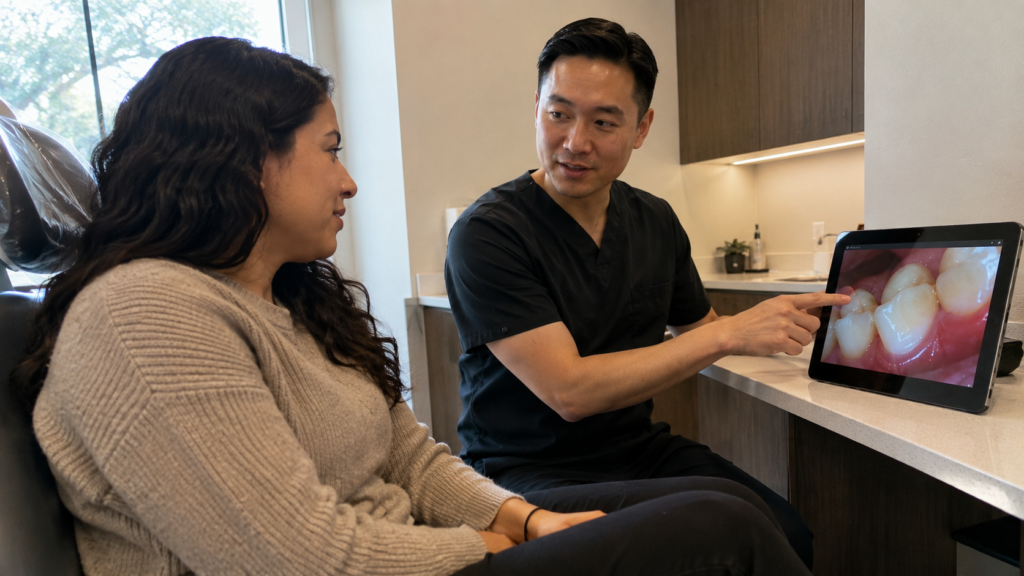
In some situations, conservative dental care can mean monitoring a finding rather than treating it immediately. The dentist documents what is present, considers whether intervention is necessary now, and reassesses the area over time.
Monitoring is therefore different from simply waiting and hoping nothing changes.
At Kevin D. Burgdorf DDS, treatment planning emphasizes honest communication, preservation of natural teeth when appropriate, and individualized recommendations based on each patient’s oral health.
What Does Conservative Dental Care Mean?
Conservative dental care is centered on addressing genuine dental needs without automatically intervening when treatment is not currently necessary.
That may mean preserving healthy natural tooth structure, choosing an appropriate level of treatment, and considering whether immediate intervention provides a meaningful benefit.
It does not mean avoiding dental treatment.
When treatment is appropriate, it can be an important part of maintaining oral health. Conservative care means making that decision based on the patient’s actual condition rather than treating every finding in the same way.
Sometimes treatment is the appropriate next step.
Sometimes monitoring is.
Why Might a Dentist Monitor a Finding?
Not every dental finding requires immediate treatment.
A dentist may consider monitoring when an area appears limited or stable and immediate intervention is not currently considered necessary.
The decision can depend on several factors, including:
- What the dentist sees during the examination
- Whether the finding appears to be changing
- Symptoms such as pain or sensitivity
- Whether normal function is affected
- The condition of the surrounding tooth structure
- Whether immediate treatment would provide a clear clinical benefit
For example, a dentist might identify a small change and determine that there is not enough reason at that point to perform an irreversible procedure.
That does not mean the finding is unimportant. It becomes something the dentist continues to evaluate.
Monitoring Is Not the Same as Ignoring
When a dentist recommends monitoring, there should still be a plan.
That plan may include:
- Documenting what the area looks like today
- Rechecking it during future examinations
- Comparing later findings with earlier ones
- Watching for new symptoms
- Using appropriate diagnostic information when needed
- Changing the recommendation if the condition progresses
Patients should understand what is being monitored and why.
They should also know what changes might cause the recommendation to shift from observation to active treatment.
That communication is important because “we’ll monitor it” should not feel like an unexplained dismissal.
What Determines Whether Monitoring Is Appropriate?
The decision is individualized.
The Current Finding
The dentist considers what is present today and how extensive the concern appears to be.
A limited, stable finding may be approached differently from one involving more significant structural damage or another condition that requires prompt care.
Symptoms
Pain, sensitivity, swelling, or discomfort can affect treatment decisions.
However, the absence of symptoms does not automatically mean that an area should be ignored. Symptoms are considered alongside the examination and other clinical information.
Whether the Condition Is Changing
Monitoring is most useful when the dentist can reassess the area and determine whether it remains stable or begins to progress.
A change over time may alter the treatment recommendation.
The Health of the Tooth
The dentist may also consider the condition of the natural tooth and surrounding structures, including how much healthy tooth structure remains and whether the area is functioning normally.
The Benefit of Immediate Treatment
Treatment should have a clinical purpose.
If immediate intervention is not currently expected to offer a clear advantage, monitoring may sometimes allow the dentist to continue evaluating the area while preserving healthy natural tooth structure.
What Could Make Treatment Necessary Later?
Monitoring is appropriate only while the dentist believes observation remains reasonable.
The treatment plan may change if there is evidence of:
- Progression
- Increasing pain or sensitivity
- Swelling
- Structural damage
- Functional changes
- More significant decay
- Other clinical changes that make continued observation less appropriate
This is why monitoring requires reassessment.
A recommendation that made sense at one appointment does not have to remain the same indefinitely. Dental treatment planning can change when the patient’s oral health changes.
Why Can Treating Too Early Be Unnecessary?
Many dental procedures are valuable when they are needed. Some also involve changing or removing natural tooth structure.
If immediate treatment does not provide a meaningful advantage, performing an irreversible procedure too early may not be necessary.
That is one reason preserving healthy natural tooth structure is an important part of conservative treatment planning.
However, this principle should not be interpreted to mean that waiting is always preferable.
When a condition progresses to a point where treatment becomes appropriate, delaying necessary care may no longer fit a conservative approach.
The goal is not to avoid intervention.
The goal is to choose the appropriate intervention at the appropriate time.
How Do Regular Dental Visits Support Monitoring?
Monitoring only works when the area is actually reassessed.
Regular examinations give the dentist an opportunity to compare what is present now with earlier findings.
If the area remains stable, continued observation may still make sense.
If something changes, the dentist can explain what is different and discuss whether the treatment recommendation should change.
Continuity can also be valuable in this process. Kevin D. Burgdorf DDS emphasizes long-term relationships in which patients receive ongoing care from the same trusted dentist.
That familiarity can provide useful context when reviewing changes in a patient’s oral health over time.
What Questions Should You Ask When Something Is Being Monitored?
Patients should feel comfortable asking why treatment is not being recommended immediately.
Useful questions can include:
- What exactly are we monitoring?
- Why isn’t treatment necessary right now?
- What changes would make treatment appropriate?
- When should the area be checked again?
- What symptoms should I report?
- Is there anything I should do differently at home?
- What options might be considered if the condition changes?
Clear answers can make the plan easier to understand.
They also help patients participate in treatment decisions rather than feeling that they simply need to accept a vague “wait and see” recommendation.
How Do Patient Goals Fit Into Conservative Treatment Planning?
Treatment planning should be a conversation.
The dentist provides the clinical assessment, but a patient’s questions, concerns, and preferences are also important.
Some patients may want to understand whether a natural tooth can reasonably be preserved. Others may have concerns about undergoing an irreversible procedure before it becomes necessary.
Those concerns can be discussed alongside the clinical findings.
The goal is not to avoid treatment at all costs or allow patient preference to replace professional judgment.
Instead, honest communication helps patients understand why a recommendation is being made and how it fits their current oral health.
This approach reflects the practice’s broader emphasis on patient education and individualized care.
When Should You Call Before Your Next Visit?
If your dentist is monitoring an area, you do not necessarily need to wait until the next planned visit if something changes.
Contact the practice if you develop a meaningful change such as:
- New or increasing pain
- New sensitivity
- Swelling
- A chipped or fractured area
- A noticeable change in your bite
- Difficulty chewing
- Other unexpected symptoms
A new symptom does not automatically mean that a serious problem has developed.
It may, however, be a reason for the dentist to reassess the area sooner.
Conservative Care Is About Choosing the Right Time for Treatment
When your dentist recommends monitoring rather than immediate treatment, it does not mean your oral health is being ignored.
It means the dentist has evaluated the current findings and determined that observation may be appropriate at that point.
The area can then be reassessed over time.
If it remains stable, continued monitoring may still make sense. If it changes, the treatment plan can change too.
That is an important part of conservative dental care: treating when treatment is appropriate, monitoring when observation is appropriate, and continuing to evaluate the patient’s oral health over time.
At Kevin D. Burgdorf DDS, care is built around honest communication, individualized recommendations, and long-term patient relationships. To learn more about the practice and its approach, you can meet Dr. Kevin D. Burgdorf.
If you have questions about an area your dentist is monitoring or want to better understand a treatment recommendation, contact us to discuss your concerns.