
Maybe you noticed it in an old photo: your front teeth used to show a little more when you smiled. Or maybe an edge that once looked rounded now seems flat. If you’re wondering, “Why do my teeth look shorter?” one possibility is that some of the tooth surface has worn away. Grinding, frequent acid exposure, and repeated friction can all play a part. More than one factor can be involved.
A dental exam can help determine whether the wear is still progressing and whether your teeth need protection, repair, or monitoring. Knowing what changed and when you first noticed it gives your dentist a useful starting point.
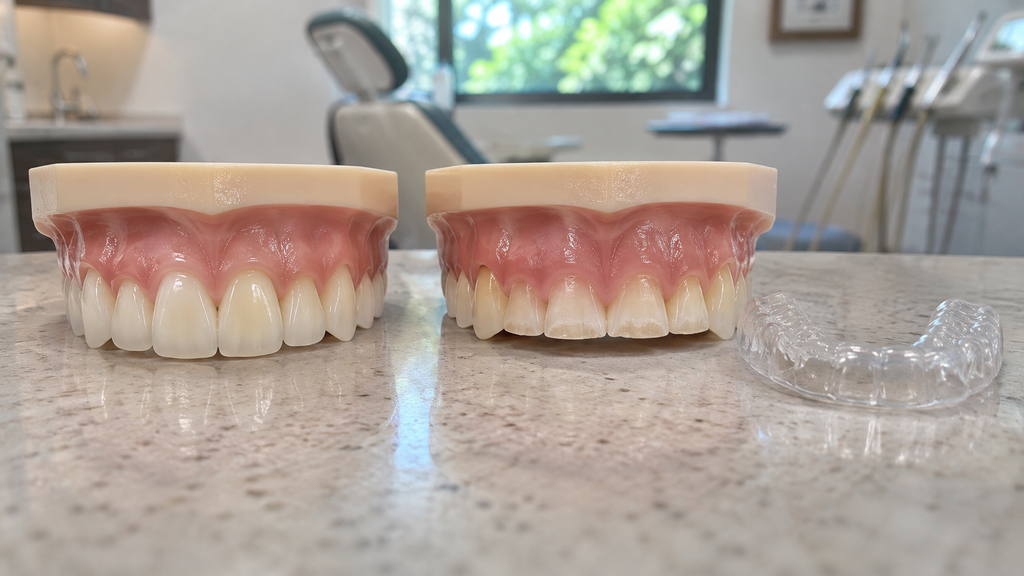
Are My Teeth Actually Getting Shorter?
Some people naturally have shorter front teeth. The useful clue is whether yours look different from how they used to. If you have an older photo that shows your front teeth clearly, bring it to your visit. It can help you point out what you’ve noticed. Camera angle and how widely you smile can change how much tooth you see, so a photo is a starting point for the conversation.
Some wear develops over years of everyday use. What matters is how much tooth structure has been lost, whether the wear is progressing, and whether it affects your comfort or how you chew. Enamel that has physically worn away does not grow back. Understanding what caused the wear can help you protect the tooth structure you still have.
If one tooth suddenly looks shorter, especially after biting something hard or taking a hit to the mouth, it may have chipped. A sudden change in one tooth and gradual flattening across several teeth are different clues. When you call the office, describe which change you noticed and whether there’s a sharp edge, pain, or sensitivity.
What Causes Teeth to Wear Down?
Dentists look at where the wear appears and what shape it takes. These are three common ways tooth structure can wear away:
| Type of wear | What happens | What you might notice |
| Attrition | Upper and lower teeth rub against each other. Repeated grinding can add to the wear. | Flat biting edges or smooth, flat spots where opposing teeth meet. |
| Abrasion | Something other than another tooth repeatedly rubs against the tooth surface. Brushing with too much pressure can contribute. | Wear along the side of a tooth, sometimes near the gumline. |
| Erosion | Repeated exposure to acids, such as those in some drinks or from stomach reflux, wears away the tooth surface. | Rounded edges, shallow dips on chewing surfaces, or sensitivity. |
These patterns can overlap. For example, acid can soften the enamel surface, making it easier for friction to wear it away. The pattern gives your dentist clues, and your symptoms and habits help fill in the picture.
Grinding or clenching can be easy to miss
Grinding or clenching, also called bruxism, can happen during the day or while you sleep. You might catch yourself clenching while concentrating, or you might wake up with a tired jaw or a headache. Those details are useful to share at an exam. A flat edge alone can’t show whether you’re grinding now. It may reflect wear that happened years ago.
Acid exposure can come from drinks or reflux
If you often sip soda, sports drinks, or citrus drinks throughout the day, your teeth are exposed to acid repeatedly. Stomach acid from reflux or repeated vomiting can also contribute to erosion. If you have frequent reflux or vomiting, let your dentist know and talk with your medical provider about the symptoms.
When Should I Have Worn Teeth Checked?
If the change has been gradual and your teeth feel comfortable, bring it up at your next dental exam. Call sooner if you notice a sudden change, a new chip or sharp edge, increasing sensitivity, pain when you bite, or a change in how your teeth fit together. Jaw soreness that keeps coming back is also worth mentioning.
Before your visit, jot down which teeth look different and when you first noticed the change. If you have sensitivity, note what brings it on, such as a cold drink or biting into food. It’s also helpful to mention any recent injury or a time when you bit something hard. You don’t need to know the cause before you call. These details simply help your dentist know where to look.
What Does a Dentist Look For During an Exam?
During an exam, a dentist can check the shape and condition of your teeth, where the wear appears, and how your upper and lower teeth come together. A dentist may ask about grinding, brushing pressure, acidic drinks, and reflux. A rough edge or a sensitive spot may also need a closer look for a chip or crack.
Seeing a dentist who knows your dental history can help. Earlier photos or exam notes can show what has changed since a previous visit. If no earlier records are available, the dentist can document the wear and compare it with findings at future visits. That comparison can help show whether the wear is stable or still progressing.
At the end of the exam, ask what the dentist found, what might be contributing, and which changes to watch for. If monitoring is recommended, ask when to return and what would warrant a call sooner.
How Can I Protect My Teeth From Further Wear?
The next step depends on what’s contributing to the wear. If you sip acidic drinks throughout the day, try having them with meals and choosing water between meals. If you tend to scrub when you brush, try a soft toothbrush and a lighter touch. Avoid chewing ice or using your teeth to open packages, since those habits can chip a tooth. During a preventive dental care visit, ask your dentist which changes might help protect your teeth.
If grinding or clenching is contributing, custom occlusal guards are one option to discuss with your dentist. A guard fits over the teeth and keeps the biting surfaces apart while you wear it. It can help protect teeth from grinding-related damage. A guard does not cure grinding or replace tooth structure that has already worn away.
Do Worn Teeth Need to Be Repaired?
If the wear is mild or stable and your teeth are comfortable, monitoring may be enough. If a small area needs repair, a dentist may be able to rebuild it with tooth-colored material. A dental crown may be considered when a tooth has more extensive damage and needs additional support. The decision depends on how much healthy tooth remains, how well the tooth functions, and what the exam shows.
If you’re concerned about how your smile looks, mention that at your visit. Before deciding on a repair, ask what may have caused the wear, what could protect the tooth from further damage, and how much healthy tooth structure each option would preserve.
Personalized Dental Care With Kevin D. Burgdorf DDS
If your teeth look shorter, flatter, or more uneven than you remember, a dental exam can help you understand what may have changed and whether monitoring, protection, or repair makes sense.
Request a Dental Exam with Kevin D. Burgdorf DDS in St. Charles, MO.